
Poll Insights
The AI Execution Gap: Why Your Data Foundation is Now Your Top Strategic Priority
Based on analysis of 3 executive polls in Jan 2026 | US & Australia markets
Across all three survey polls, the findings point to a consistent theme: the primary barriers to scaling GenAI and Agentic AI are less about algorithmic capability and more about enterprise execution readiness. Organizations are encountering a common set of systemic constraints such as data and context limitations, security and governance requirements, integration complexity, workflow reliability, and cross-functional stakeholder alignment, each emerging with comparable weight. This indicates that the journey from pilot to production is fundamentally an operating model challenge, requiring stronger foundations in data connectivity, controls, tooling integration, and accountability. In parallel, fragmented customer data continues to act as a structural “growth tax,” driving revenue leakage, slower decision-making, and rising operational costs, while many organizations still lack the measurement maturity to fully quantify its impact. Collectively, these insights reinforce an emerging shift toward “AI economics,” where sustainable adoption will depend on credible ROI models anchored in reliability, speed of execution, and unit-cost efficiency.
The overarching implication is clear: scaling AI will require disciplined orchestration of governance, infrastructure, and repeatable delivery patterns, not isolated experimentation.
Core Insights
Three quantified findings that reveal the systemic nature of AI failure
What blocks GenAI pilots from production?
Drawing on insights from 4,500+ respondents, the results were devastating approximately two-thirds of respondents cited EACH of the five major barriers where participants identified
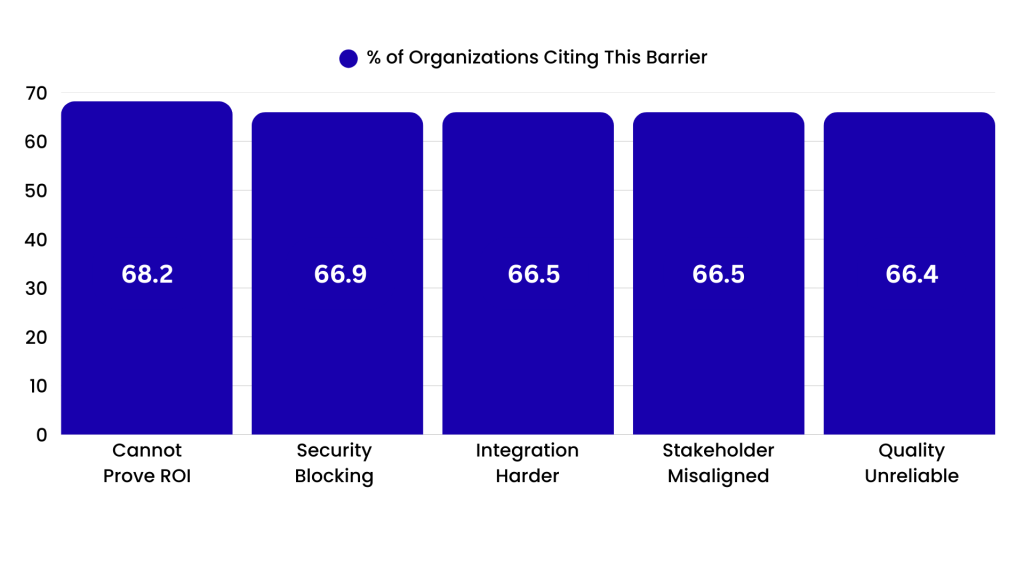
Executive signals - Pilot → production is an execution problem
- The single biggest constraint preventing GenAI pilots from reaching production, organizations most frequently point to challenges in proving ROI, addressing security and compliance requirements, and overcoming complex data and system integration hurdles.
- Additional barriers include inconsistent performance in real-world workflows and misalignment across key stakeholders such as Product, IT, and Legal, highlighting that successful scaling requires coordinated progress across multiple dimensions.
Where does fragmented customer data hurt your business the most today?
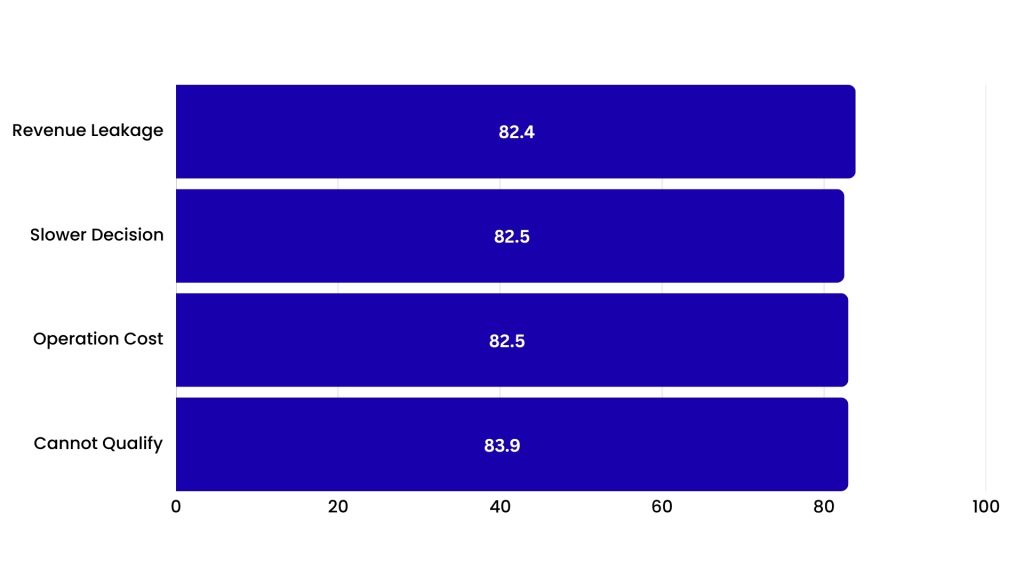
Based on input from 5,000+ respondents, Organizations selected an average of 3.3 out of 4 impact categories,
Executive signals - Fragmentation is a “growth tax”
- Data fragmentation isn't causing isolated problems, it's simultaneously eroding value.
- Participants could select multiple areas of impact, fragmented customer data most often leads to revenue leakage due to inconsistent targeting and duplicate records, slower decision-making as teams lack a unified customer view, and higher operational costs driven by manual reconciliation across systems.
- Many organizations also report that the impact remains difficult to quantify, reflecting limited visibility into end-to-end customer outcomes.
What’s Really Holding Back Your Agentic AI?
Tell us the top three roadblocks slowing your ROI, from data to scaling and beyond.
Drawing insights from 5,800+ respondents, where participants selected their top three roadblocks to scaling Agentic AI
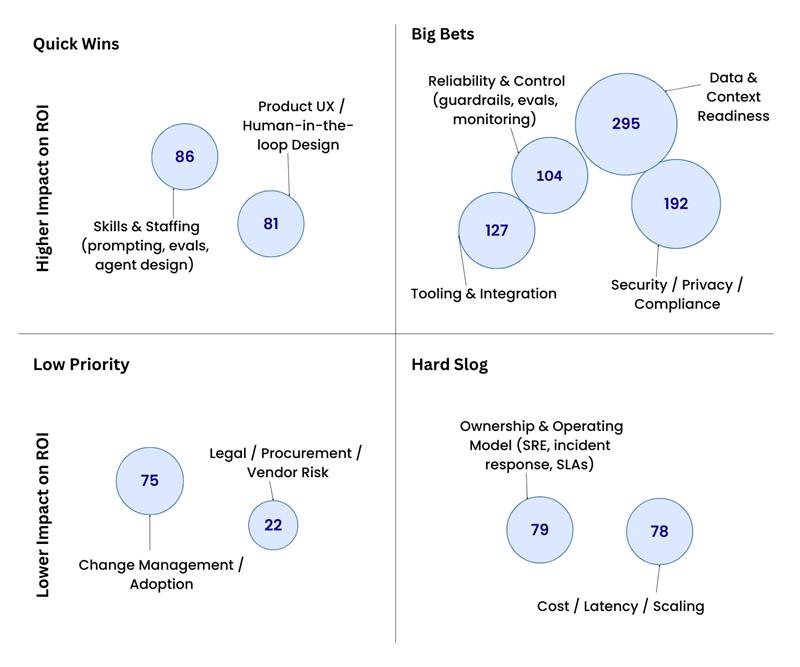
Executive signals - Agents amplify enterprise constraints
Tell us the top three roadblocks slowing your ROI, from data to scaling and beyond.
- This indicates that the most significant constraints are data and context readiness, as many organizations still lack clean, connected, and usable enterprise data.
- Security, privacy, and compliance remain major blockers due to strict governance requirements and regulatory risk,
- while tooling and integration challenges persist because deploying agents requires deep connection with existing systems.
- Respondents also highlight reliability and control (guardrails, monitoring) and skills and staffing gaps as critical factors slowing adoption at scale
Closing Perspective
The AI execution gap is rapidly becoming a competitive fault line. While models continue to advance, organizations constrained by fragmented data, weak governance, and brittle workflows will see diminishing returns from continued experimentation.
Closing this gap requires a deliberate shift in mindset: from chasing pilots to engineering foundations. Enterprises that act now—by aligning data, security, and operating models—will define the next phase of AI-led growth. Those that don’t risk turning AI from a strategic advantage into a permanent cost center.
Get Expert Guidance Today
Every great outcome starts with a conversation.
Tell us what your are building, and we’ll show you how to get there faster.
Let’s work together
Unleash your ideas, goals, and vision. Join us on the journey to remarkable results. Let’s connect and innovate together!